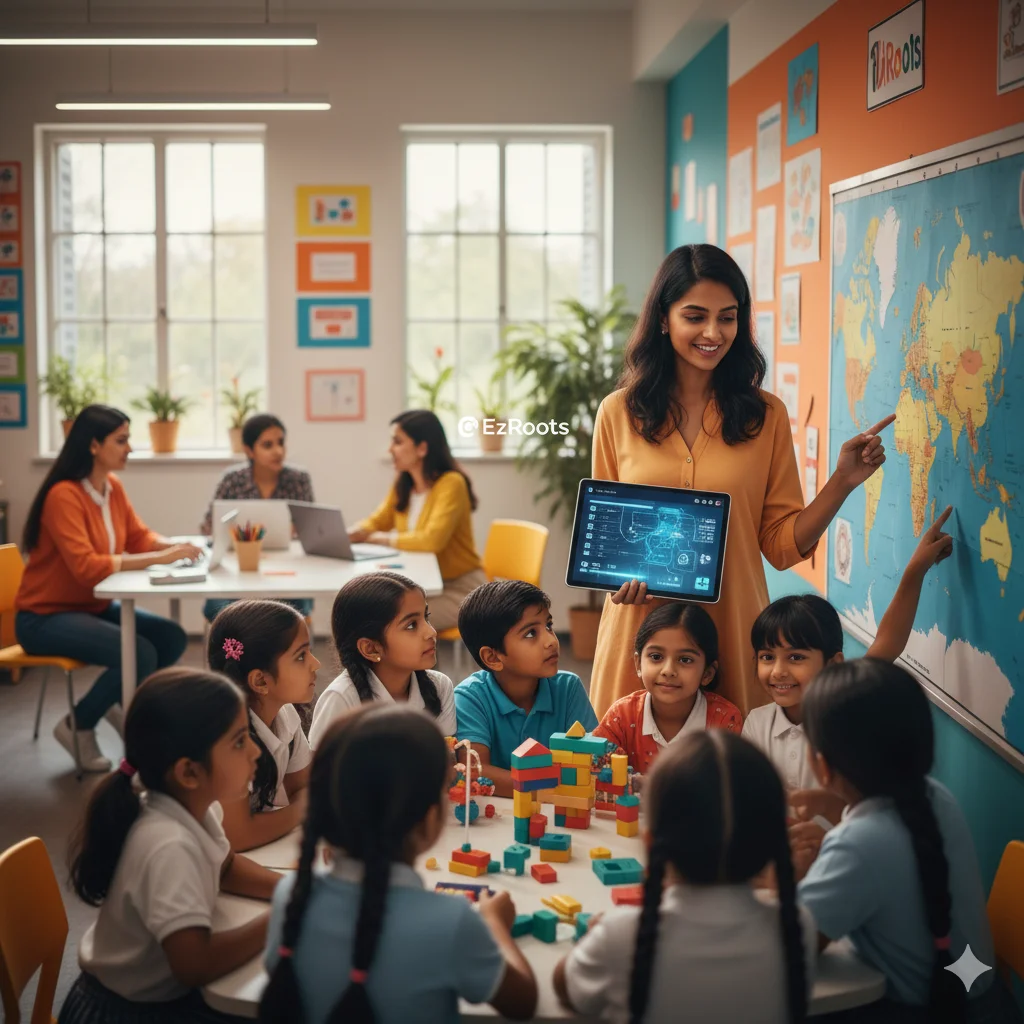
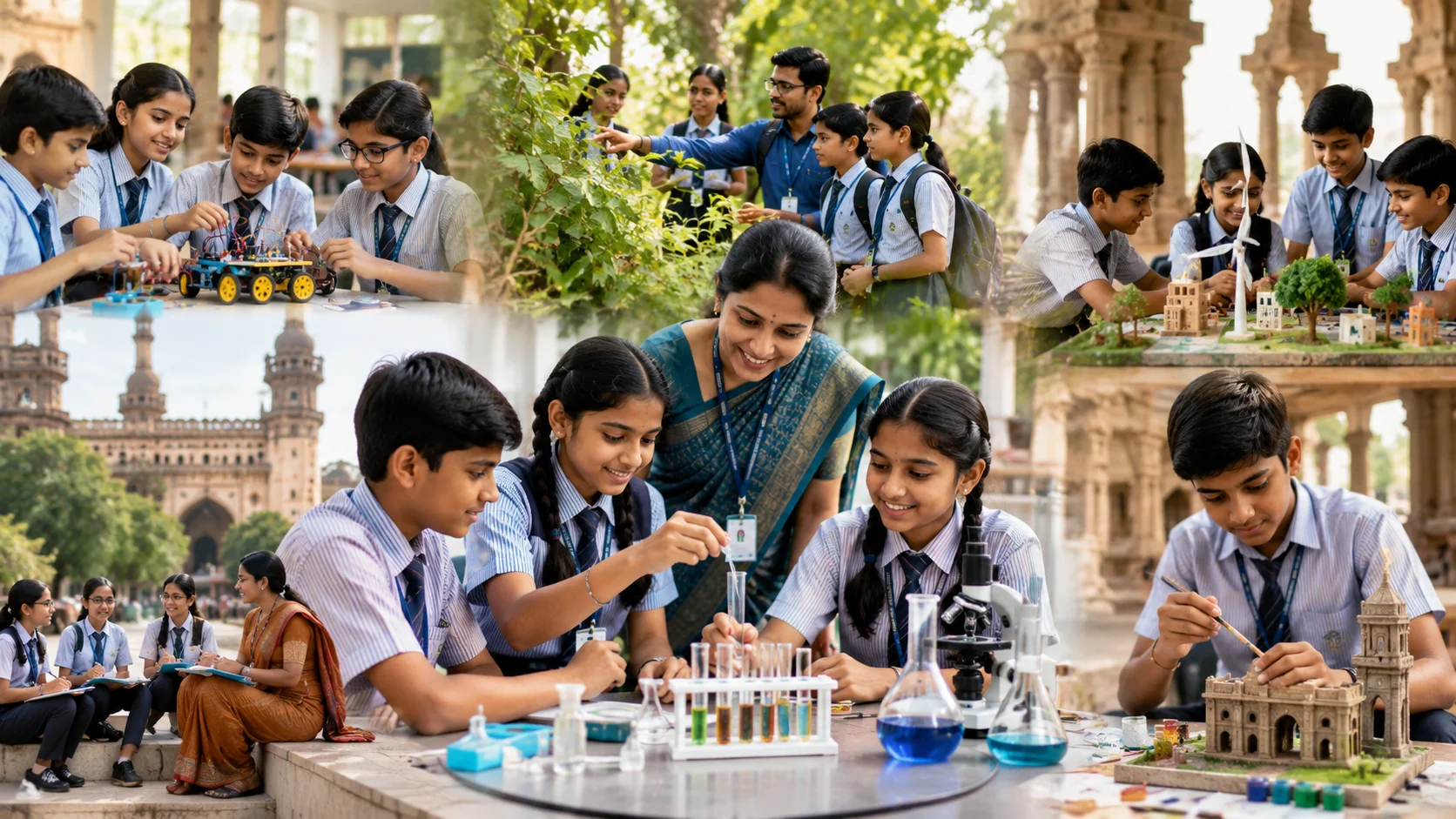

Education is evolving beyond textbooks, memorisation, and traditional classroom instruction. Schools today are looking for ways to make lessons more engaging, practical, and meaningful for students. An Experiential Learning Program for Schools in Telangana can help create this shift by encouraging students to learn through activities, exploration, real-world situations, and hands-on experiences. Instead of simply receiving information, students actively participate in the learning process and develop a deeper understanding of concepts.
What Is Experiential Learning?
Experiential learning is an educational approach based on the idea of learning by doing. Students understand concepts by participating in activities, experiments, projects, discussions, simulations, and real-life applications.
For example, instead of only reading about plants in a science textbook, students can plant seeds, observe their growth, record changes, and discuss what they have learned. Similarly, mathematics can be connected with shopping activities, measurements, puzzles, games, and everyday problem-solving situations.
This approach makes education more interactive while helping students connect classroom knowledge with the world around them.
EZ Roots focuses on activity-based and multisensory learning approaches that encourage creativity, thinking, innovation, and practical understanding. Its learning aids are designed to help students approach challenges differently, analyse situations, and find solutions.
Improves Student Engagement
One of the biggest advantages of experiential learning is increased classroom participation. Students are naturally curious, and activities give them opportunities to explore that curiosity.
When children participate in experiments, group activities, storytelling, projects, games, and practical tasks, lessons become more interesting. Instead of passively listening to a teacher, students become active participants.
Higher engagement can also encourage students to ask questions, share ideas, and take greater interest in classroom discussions.
Builds Better Understanding of Concepts
Memorising information may help students answer certain questions, but understanding how a concept works can create stronger and more meaningful learning.
Experiential activities allow students to see how theoretical concepts work in practical situations. This makes difficult topics easier to understand.
For instance, students can learn about measurements through hands-on activities or understand basic scientific principles through simple classroom experiments. Such experiences create a connection between knowledge and application.
Strengthens Critical Thinking and Problem-Solving
Modern education needs to prepare students to handle unfamiliar situations. Experiential learning provides opportunities for students to think, analyse, compare, experiment, and make decisions.
During a project or activity, there may not always be one immediate answer. Students need to understand the situation, identify the challenge, explore possible solutions, and decide what works best.
These experiences gradually strengthen analytical thinking and problem-solving abilities that students can use both inside and outside the classroom.
Encourages Creativity and Innovation
Creativity develops when students receive opportunities to think beyond fixed answers.
Activity-based projects, art integration, model making, storytelling, experiments, and open-ended tasks can encourage students to express their ideas in different ways.
An effective learning environment should not only ask students to remember information. It should also give them space to create, experiment, make mistakes, and try again.
EZ Roots highlights creativity, thinking, and innovation as important parts of its learning approach, with learning experiences designed to encourage students to explore and discover.
Develops Communication and Teamwork
Many experiential activities involve collaboration. Students may work in pairs or groups to complete projects, solve challenges, conduct experiments, or present their findings.
While working together, students learn how to:
- Communicate their ideas
- Listen to others
- Share responsibilities
- Respect different opinions
- Make group decisions
- Present information confidently
These social skills are important for academic development as well as future personal and professional situations.
Improves Knowledge Retention
Students are more likely to remember information when they actively experience it.
A practical activity can involve observation, movement, discussion, problem-solving, and reflection. These multiple learning experiences can help students form stronger connections with the subject.
This is particularly useful for younger learners, who often understand ideas better when lessons include hands-on and interactive elements.
Builds Confidence and Independence
Experiential learning gives students opportunities to make choices and take responsibility for tasks.
When students successfully complete an activity, solve a problem, explain an idea, or present their work, they experience a sense of achievement. Repeated experiences like these can gradually build confidence.
Students also learn that making mistakes is part of learning. This can encourage them to try new approaches rather than being afraid of getting an answer wrong.
Connects Classroom Learning with Real Life
One important benefit of an Experiential Learning Program for Schools in Telangana is its ability to connect academic subjects with everyday experiences.
Students can learn mathematics through budgeting and measurements, science through observation and experiments, language through storytelling and presentations, and social studies through projects and role-play.
When students understand why a concept matters in real life, learning becomes more relevant and meaningful.
Supports Holistic Student Development
Education is not limited to academic marks. Schools also need to support communication, creativity, emotional development, collaboration, confidence, and practical skills.
Experiential education can contribute to these areas by combining academic concepts with activities that encourage social interaction, creativity, decision-making, and independent thinking.
EZ Roots describes its approach as child-centred and engaging, with learning experiences intended to support broader cognitive and developmental skills.
Makes Classrooms More Interactive
A classroom built around active participation can create a more dynamic learning environment. Teachers can use learning aids, projects, demonstrations, games, experiments, and collaborative activities to make lessons more interactive.
A balanced approach can help teachers deliver concepts while students actively explore and practise them.
How Schools in Telangana Can Implement Experiential Learning
Schools can begin by introducing experiential activities into existing subjects rather than changing the entire curriculum immediately.
Some practical approaches include:
- Hands-on classroom activities
- Project-based assignments
- Science experiments
- Role-playing exercises
- Group discussions
- Educational games
- Field-based learning
- Art and craft integration
- Real-world problem-solving tasks
- Reflection and presentation activities
Teachers should select activities according to students’ age, learning objectives, available resources, and classroom requirements.
Teacher training is also important. Educators need clear guidance on planning activities, managing groups, assessing participation, and connecting practical experiences with curriculum outcomes. EZ Roots provides curriculum, consulting, and teacher-training support as part of its education-focused services.
Why Experiential Learning Matters for the Future
The education landscape is increasingly moving towards skill development, competency, creativity, and practical understanding. Students need to be prepared not only to remember information but also to apply knowledge, solve problems, communicate effectively, collaborate with others, and adapt to new situations.
For schools, adopting an Experiential Learning Program for Schools in Telangana can therefore be an important step towards creating a more engaging and student-focused learning environment. By combining curriculum objectives with hands-on experiences, schools can help students develop stronger conceptual understanding alongside valuable life skills.
Experiential learning provides schools with an opportunity to make education more engaging, practical, and meaningful. From improving student participation and knowledge retention to developing creativity, communication, confidence, teamwork, and problem-solving skills, its benefits extend well beyond academic learning.
For schools looking to create classrooms where students actively explore, think, create, and apply their knowledge, Experiential Learning Program for Schools in Telangana can offer a practical pathway toward more holistic and future-ready education. With the right curriculum, learning resources, teacher support, and implementation strategy, experiential learning can become a valuable part of a modern school environment.
FAQs
Experiential learning helps students learn through practical activities, projects, experiments, and real-world experiences.
It improves engagement, understanding, creativity, problem-solving, teamwork, communication, and student confidence.
It encourages students to learn through activities, projects, and practical tasks, making lessons more engaging and helping them participate actively.
Schools can use hands-on activities, projects, experiments, games, and group tasks within existing lessons.
It helps teachers make lessons more interactive using practical activities, suitable resources, and effective teaching methods.
