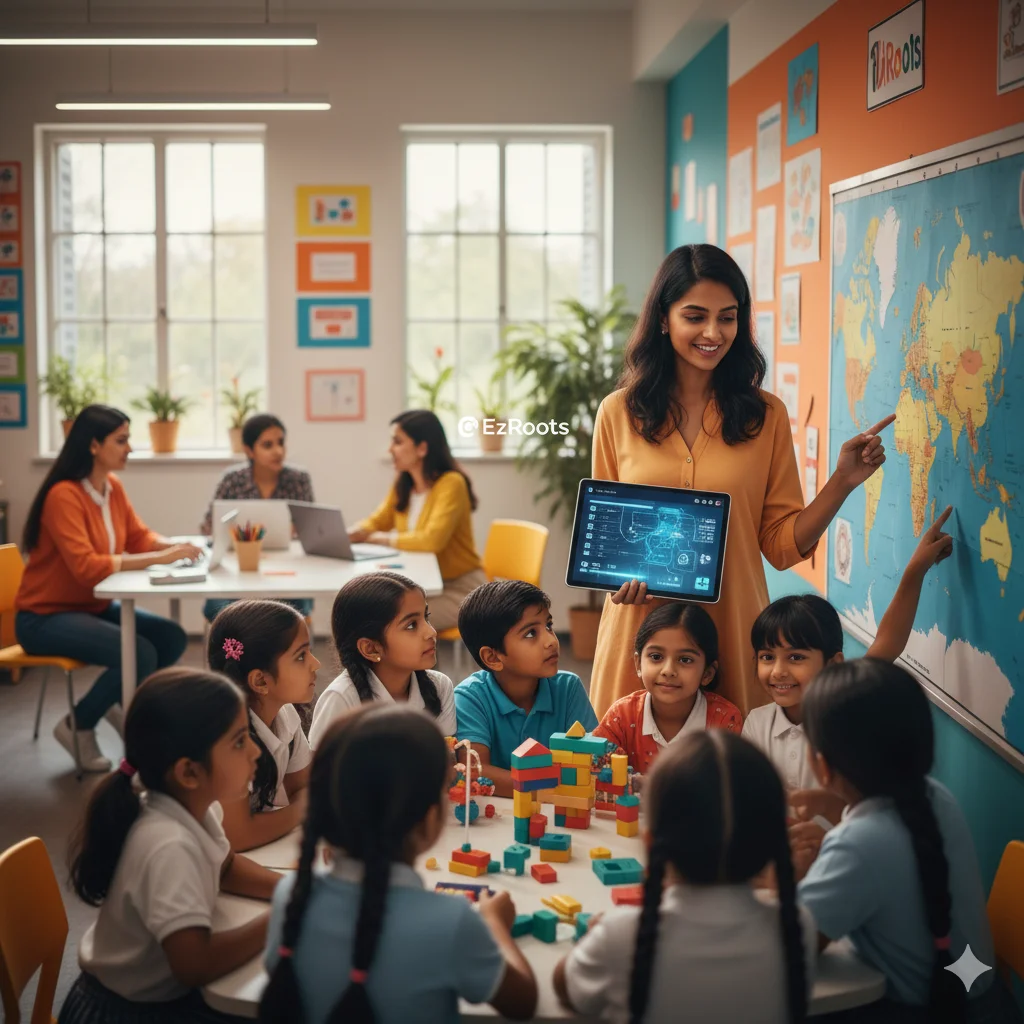
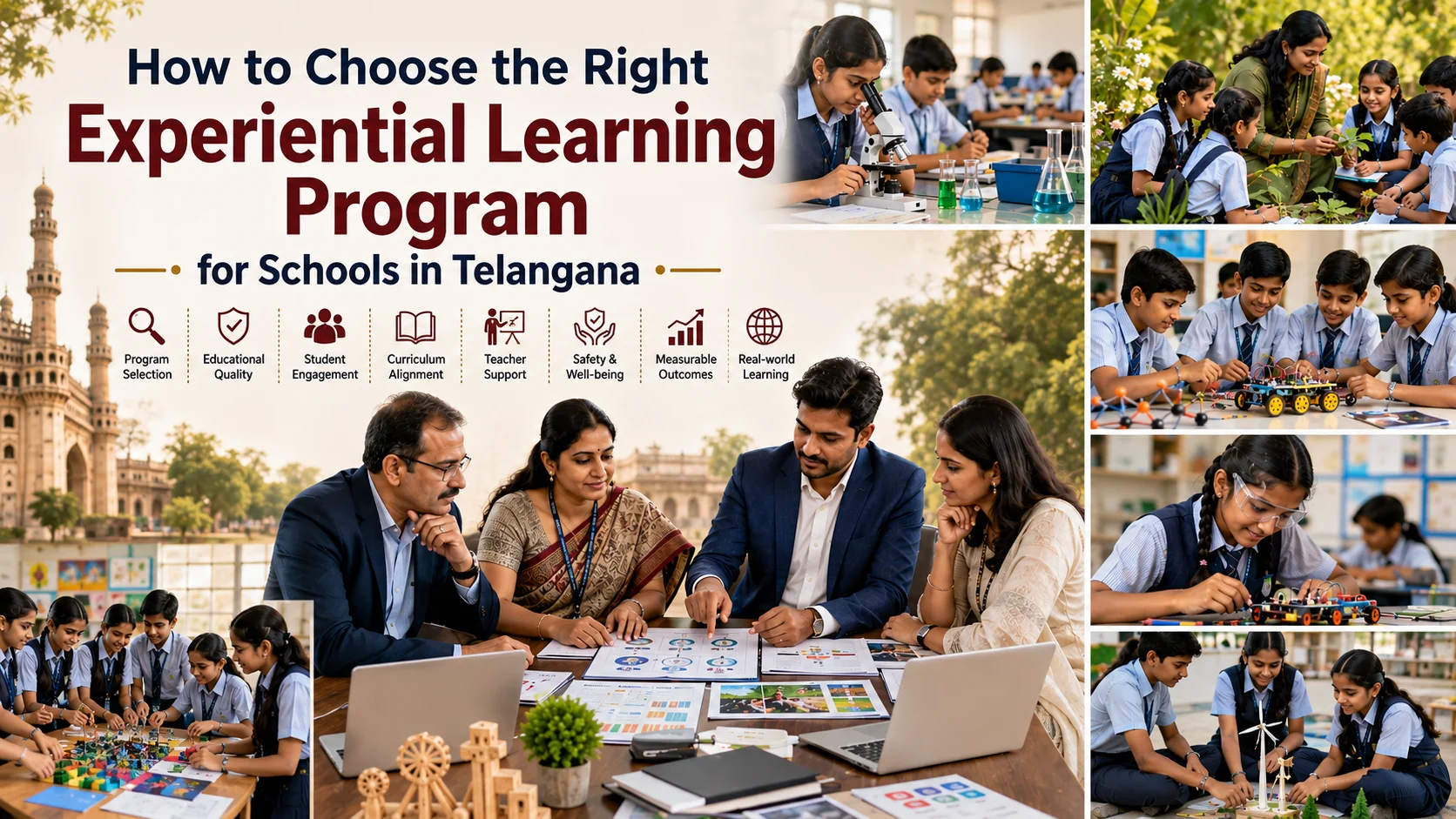

Education becomes more meaningful when students get opportunities to learn beyond textbooks and classrooms. Activities that allow children to explore, observe, participate, solve problems, and work with others can make concepts easier to understand and remember. This is why many schools are exploring an Experiential Learning Program for Schools in Telangana to provide students with practical and engaging learning experiences.
Every school has different academic goals, student age groups, schedules, and expectations. A well-planned experiential learning program should complement classroom education while helping students develop practical skills and confidence.
Understand What Experiential Learning Means
Experiential learning is an approach where students learn through direct experiences. Instead of only listening to explanations or reading about a topic, students actively participate in activities connected to their learning objectives.
For example, students may participate in:
- Team-building activities
- Nature-based learning
- Problem-solving challenges
- Leadership activities
- Creative workshops
- Outdoor exploration
- Community-based projects
- Skill-development activities
Each activity should have a clear learning purpose and encourage students to think about what they experienced and what they learned from it.
1. Identify Your School’s Learning Objectives
Before selecting an Experiential Learning Program for Schools in Telangana, schools should first identify what they want students to gain from the program.
Some schools may focus on communication and teamwork, while others may want to encourage leadership, creativity, critical thinking, or environmental awareness.
Ask questions such as:
- What skills should students develop?
- Which age groups will participate?
- What subjects or concepts can be connected to the activities?
- Does the school want an academic, personal-development, or combination-based program?
- What outcomes should teachers observe after the program?
Having clear objectives makes it easier to compare different programs and choose one that matches the school’s requirements.
2. Consider the Age and Learning Level of Students
An activity suitable for younger children may not be appropriate for teenagers. Experiential programs should be designed according to students’ age, physical abilities, interests, and learning levels.
For primary students, activities can focus on exploration, creativity, observation, cooperation, and basic problem-solving. Older students may benefit from more challenging activities involving leadership, decision-making, teamwork, and independent thinking.
A good provider should be able to adapt activities for different age groups instead of offering exactly the same experience to every student.
3. Look at the Variety of Activities
A strong experiential learning program should offer a balanced combination of activities. Students have different personalities and learning preferences, so variety can help keep them engaged.
Look for programs that include a mixture of:
Physical activities: Encourage coordination, participation, and teamwork.
Creative activities: Help students express ideas and approach challenges differently.
Problem-solving tasks: Encourage logical thinking and decision-making.
Nature-based activities: Help students observe and understand their surroundings.
Group challenges: Develop communication, collaboration, and leadership.
The activities should be interactive and purposeful rather than simply recreational.
4. Check the Safety Standards
Safety should always be one of the most important factors when selecting an Experiential Learning Program for Schools in Telangana.
Schools should understand how the provider manages student safety during activities. Important points to consider include trained instructors, appropriate equipment, activity-specific safety procedures, supervision, emergency preparedness, and suitable locations.
Schools should also check whether the program provider clearly communicates safety guidelines to teachers, students, and parents when required.
A program can be exciting and challenging while still maintaining appropriate safety standards.
5. Evaluate the Experience of the Program Provider
The quality of the program depends significantly on the people delivering it. Schools should consider the provider’s experience in working with students and educational institutions.
Look for:
- Experienced facilitators
- Trained activity leaders
- Clear program structure
- Experience with different age groups
- Positive feedback from schools
- Well-organised activity planning
- Strong communication with teachers
It is also useful to ask for details about previous programs and understand how facilitators interact with students.
6. Make Sure Learning Happens Beyond the Activity
Experiential learning is more effective when students have an opportunity to reflect on their experiences. Simply completing an activity does not automatically create meaningful learning.
For example, after a teamwork challenge, facilitators can ask students what worked, what did not work, how they communicated, and what they would do differently next time.
Therefore, when evaluating an Experiential Learning Program for Schools in Telangana, ask whether the program includes discussions, reflection sessions, feedback, or follow-up activities.
7. Check Whether the Program Can Be Customised
Every school has its own requirements. A flexible program can be more useful than a fixed package that cannot be adjusted.
Schools may need programs based on:
- Student age
- Number of participants
- Learning objectives
- Available time
- Location
- Academic themes
- Specific skill-development goals
A provider that understands the school’s requirements and customises activities accordingly can create a more relevant experience for students.
8. Consider Location and Accessibility
Telangana has a mix of urban and rural environments, natural spaces, educational institutions, and activity centres. The location selected for an experiential program should suit the planned activities and student requirements.
Schools should consider travel time, accessibility, facilities, weather conditions, supervision requirements, and the overall suitability of the location.
The right environment can make the learning experience more engaging while reducing unnecessary logistical challenges.
9. Compare Program Value, Not Just Price
Cost is naturally an important consideration, but schools should avoid selecting a program based only on the lowest price.
Instead, compare what is included in the program. Consider facilitator expertise, number of activities, safety arrangements, learning resources, customisation, transportation requirements, and post-activity support.
The right Experiential Learning Program for Schools in Telangana should provide meaningful value by combining enjoyable experiences with measurable learning outcomes.
10.Ask for Clear Learning Outcomes
Before finalising a program, schools should ask the provider what students are expected to learn or develop.
Potential outcomes may include:
- Better teamwork
- Improved communication
- Leadership skills
- Greater confidence
- Critical thinking
- Problem-solving ability
- Creativity
- Decision-making skills
- Greater awareness of the environment
Clear outcomes help schools evaluate whether the program supports their broader educational objectives.
Make Experiential Learning a Meaningful Part of Education
Choosing an Experiential Learning Program for Schools in Telangana is not simply about selecting an activity provider. It is about finding a program that connects experience with learning and gives students opportunities to participate, think, collaborate, and reflect.
Schools should evaluate the learning objectives, age suitability, activities, safety, facilitators, customisation, location, and expected outcomes before making a decision. When these factors are carefully considered, experiential learning can become a valuable complement to traditional classroom education.
The right program can give students memorable experiences while helping them build practical skills that support their academic, personal, and social development.
FAQs
Experiential learning helps students learn through practical activities, projects, experiments, and real-world experiences.
It improves engagement, understanding, creativity, problem-solving, teamwork, communication, and student confidence.
It encourages students to learn through activities, projects, and practical tasks, making lessons more engaging and helping them participate actively.
Schools can use hands-on activities, projects, experiments, games, and group tasks within existing lessons.
It helps teachers make lessons more interactive using practical activities, suitable resources, and effective teaching methods.
